

Written by Jill Zwarensteyn, Editor
Unfortunately for parents, newborns rarely sleep on command. While their irregular sleep pattern can be exhausting and frustrating, the good news is it’s often not a cause for concern.
If your new baby is struggling to fall asleep or stay asleep, it could be because of a desire to play, teething pain, a sleep regression, or any number of other factors. In this article, we’ll go over some of the most common reasons infants struggle to sleep, so you’ll have a better understanding of why this is happening and what to do about it.
Reasons Why Your Newborn Won’t Sleep
Sleep regressions are a normal part of early childhood development, but there are other reasons why your baby won’t sleep. Here, we’ll go over some of the most common factors that contribute to your baby’s fight against bedtime.
Baby Has Skipped a Nap
You might think that skipping a nap would make bedtime easier since your baby will be so sleepy. This is often not the case, though, as skipping naps can make an infant overtired5, which can mean they’re less cooperative and more “wired” at bedtime.
Even if your baby slept well all night, naps are still recommended until they are about two or three years old.5 Of course, sometimes skipping a nap is unavoidable, but this may make bedtime a little more difficult.
Babies Don’t Know Day From Night
We briefly mentioned that babies are still developing their circadian rhythm for roughly the first year of their life.2 For nine months, babies are bundled up inside a dark womb so night and day mean nothing to them because in the womb, it didn’t matter. When they are born, they have no concept of this difference and, as a result, will take a bit of time to adjust.
To help your baby develop their circadian rhythm, try spending some time outside with them in the early morning. Research6 shows that light exposure early in the morning and almost no light exposure at night make foster better sleep in infants. To make your baby’s bedroom as dark as possible at night or during nap times, you might invest in some good blackout curtains.
Your Baby is Experiencing a Growth Spurt
Growth spurts, while terrific for overall development, can be a nightmare for parents trying to get their child to bed. Because infants are growing constantly and often go through developmental bursts, they may become overly tired or easily fussy because their body is exerting so much energy to process their growth.3
Related: Best Baby Crib Mattress
Feeling Cold or Hot
The American Academy of Pediatrics7 recommends that babies under a year old sleep in a crib with no blankets, pillows, or toys. Because of this, it can be tempting for parents to bundle up their infant in layers, hats, or socks to ensure they don’t get cold through the night.
However, too many layers might leave your baby uncomfortably hot. Conversely, too few layers or chilly air conditioning may leave your baby too cold. A good way to check is to feel their chest — if it feels hot to the touch, take off a layer. If they’re cold, throw on another.
Learn more:
Overtiredness
One of the most common culprits of restlessness before bedtime is overtiredness8. Despite sounding counter-intuitive, when an infant is exhausted, they become more cranky and irritable, leading to difficult behavior.8 When children become fixated on something or inconsolable, it can be challenging to settle them down for bedtime.
A good way to combat overtiredness is to ensure they get proper naps every day. Stanford Medicine recommends up to eight hours of nap time for newborns, seven hours for one-month-olds, four to five hours for three-month-olds, four hours for six-month-olds, and three hours of nap time for babies nine months to one year.1
Hunger
If your newborn is waking up in the middle of the night despite the ability to self-soothe, they may be waking up due to hunger.
If you think this may be the cause, try encouraging your baby to snack or nurse a little longer during the day to get in some more calories before bedtime. If they’re not hungry during the day, another technique to get them to eat more is called “dream feeding,” when you gently rouse them during the night to feed them after they’ve fallen asleep. Dream feeding is somewhat controversial as it can lead to your infant relying on nursing in order to sleep, or it could wake them up and make it hard for them to get back to sleep.
Overstimulation
While it’s great to wear your infant out so they sleep soundly at night, they can become overly excited if they’re exposed to too much stimulation. Experts9 recommend avoiding vigorous playtime with your baby right before bedtime or naptime. Instead, keep your voice low and even, dim the lights, and create a soothing rather than stimulating environment when you start to notice your baby’s sleep cues.
Sleep cues could include yawning, rubbing their eyes, fussiness, or nodding off.2 When they’re visibly tired, try to lay them down so they can rest immediately. In addition, putting your newborn down while they’re sleepy but still awake will help with sleep training.2
Can a Mother’s Diet Be a Potential Cause?
Generally speaking, mothers don’t need to modify their diet while breastfeeding. However, drinking significant amounts of alcohol and caffeine is discouraged for a breastfeeding person.
Michigan Medicine10 notes that if there is alcohol in your bloodstream, there is also alcohol in your breast milk. Likewise, if you have caffeine in your bloodstream, you’ll have caffeine in your breast milk. They also advise that “pumping and dumping” (pumping breast milk and then throwing it out after drinking alcohol) will not remove the alcohol from the milk any faster.10
For these reasons, doctors advise avoiding breastfeeding for at least four hours after consuming any amount of alcohol and limiting your consumption of caffeine if you notice it keeps your infant awake after breastfeeding.10
Your Newborn Doesn’t Feel Well
Unfortunately, the only means of communication before children learn to speak is crying, and if they don’t feel well, they will be sure to communicate it.
If your baby is crying at night, you can try comforting or feeding them, and if nothing seems to work, you can check to see if they might be sick11. If your baby has been coughing, sneezing, experiencing vomiting or diarrhea, sweating during feedings, has a change in the color of their urine, or has a fever, contact your pediatrician.
Lack of Routine
People of all ages – babies, children, and adults – all tend to feel less anxious and more relaxed when they have a reliable, consistent routine12.
Additionally, doing the same activities in the same order each day will help your baby build associations. For example, if you have dinner, followed by bath time, and then reading a book before bed each night, your baby will start to associate this routine with bedtime. Eventually, just getting out the book or turning on the white noise may get them sleepy.
If your baby is having trouble sleeping, try implementing a comfortable yet firm routine, and stick with it for a few weeks to see if this helps.
Baby Wants to Play
Your baby may have excess energy they need to express, and if this is the case, they’ll need a bit more attention and playtime before nightfall. If they need to play, though, just remember to do something calming afterward to wind them down again, as playtime too close to bed may make for difficulty sleeping as well.9
Inability to Transition From Active to Passive Sleep
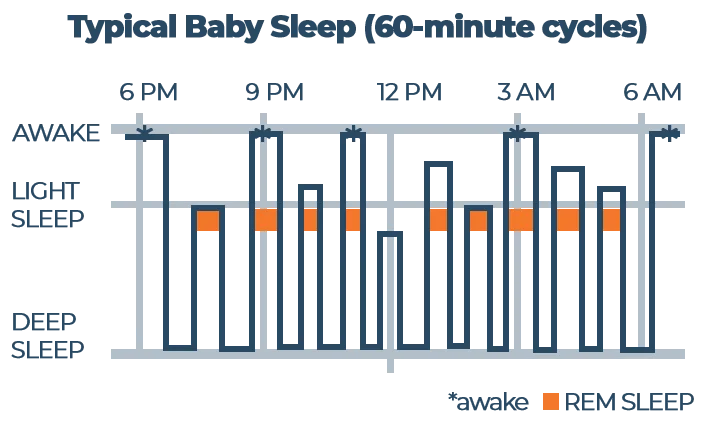
Infants don’t have the same sleep cycles as adults because their brains haven’t had time yet to develop fully. As time goes on they’ll gain this ability, but until then, much of their sleep time will be spent in active sleep13, which is similar to REM.
During this stage, newborns are more likely to wake up, making them more prone to sensitive sleep habits. Infants spend about 50 percent of their sleep time in active sleep, and adults only spend about 20 percent in REM sleep.13 This makes for more chances to wake up due to a disturbance.
Your Baby is Going Through a Sleep Regression
For the first year of your baby’s life, they are still developing a circadian rhythm – the body’s 24-hour cycle of waking and sleeping. As they are developing this clock, experts say that their sleep schedule2 may abruptly change. Babies will go from spending most of their time in deep sleep as newborns to cycling between deep sleep and REM sleep as adults do.2 As they start this “cycling” transition, your baby may start waking up through the night again or refusing to go to bed.2
Sleep regressions can also be caused by all of the changes a baby experiences in development. As they become more mobile and develop motor skills3, they may prefer moving about and exploring instead of sleeping. All of this rapid development also means your baby will need more nutrients4– so increased hunger can be a reason for not wanting to sleep as much.
Even though the phrase “sleep regression” can elicit a feeling of dread in many new parents, rest assured, a sleep regression usually indicates that your baby is properly developing and growing.
Coping With a Sleep Regression
Struggling with your kid’s sleep habits can be exhausting for any parent. However, there are ways to cope. First of all, it helps to remember that regressions are temporary and these sleepless nights will not last forever.
One of the best tools at your disposal is consistency; be sure you are sticking with a regular bedtime routine and sleep schedule. For example, you might read a bedtime story to indicate that it’s bedtime or dim the lights and play relaxing white noise at the same time each night. Additionally, you can make sure your baby is getting plenty of naptime during the day, as an overtired baby will be more difficult to settle come nightfall.
Want to know more? Read our guide to the best baby bedtime routine
How Much Should Newborns Sleep?
The amount of sleep a baby needs varies, depending on how many months old they are. A newborn, for example, needs almost 16 total hours of sleep, whereas a two-year-old needs around 13 hours. Remember, this “total” amount of sleep is broken up throughout a 24-hour period, so 16 hours might look more like eight hours at night, and eight more hours broken up into naps throughout the day.
These are the recommended total hours of sleep1 (per 24 hours) for babies of different ages:
- Newborns: 16 total hours (8 to 9 hours at night)
- One month: 15.5 total hours (8 to 9 hours at night)
- Three months: 15 total hours (9 to 10 hours at night)
- Six months: 14 total hours (10 hours at night)
- Nine months: 14 total hours (11 hours at night)
- One year: 14 total hours (11 hours at night)
- One and a half years: 13.5 total hours (11 hours at night)
- Two years: 13 total hours (11 hours at night)
As your baby gets older, they’ll be doing less of their total sleeping during the day with naps and more of it during the night. Your newborn baby will go from napping for about eight hours during the day to just two hours of naps when they’re a two-year-old.1
Find out more in this guide: Parent’s Guide to a Child’s Sleep
How to Get Your Newborn to Sleep: Problems and Solutions
Baby Refuses to Sleep on Their Back
The American Academy of Pediatrics14 recommends keeping your baby on their back until they are one year old to reduce the risk of sudden infant death syndrome (SIDS). Unfortunately, some newborns don’t enjoy sleeping on their backs from the beginning, which can be a tricky problem to solve. If this is the case, try placing your baby on their back to sleep in a swaddle. Then, place your hand on their chest and gently rock them back and forth to comfort them until they doze off. If the baby rolls onto their stomach or side during sleep, reposition them onto their back.
Once your baby gets to an age (sometimes as early as two months15, but more typically around four months old), when they can comfortably roll from their back to their stomach and then onto their back again, you generally don’t need to worry about repositioning them during the night. However, you should still put them to bed on their back until they reach that one-year mark.
It’s also important that once your baby starts rolling, you stop swaddling them for safety reasons.15
Related: Best Baby Crib Mattress
Restless Sleeping Caused by Night Feedings
Infants can easily get into the habit of nursing to sleep – or, relying on nursing in order to fall asleep. Unfortunately, associating sleep with nursing might mean that your baby will get fussy or have trouble sleeping without nursing.
One way to move away from this habit is to dream-feed your baby. This is when you feed your infant after they’ve gone down for bed and are asleep. You gently rouse them but don’t wake them up. Be sure to position them correctly so they’re ingesting safely, and let them sleepily nurse while they’re half-asleep.
For many parents, this means a baby that sleeps more soundly through the night, however, in some cases, it may actually wake your baby up unnecessarily and they won’t go back to sleep. If this is the case for your baby, stop dream feeding and instead just try breaking up the association with nursing and sleeping by putting something relaxing, like reading a book, in between.
Teething Pain
Teething begins in most infants somewhere between four and seven16 months old. Teething occurs when baby teeth are just starting to grow in and push through the surface of their gums, and it can cause a lot of discomfort and exhaustion.16
If your child is enduring teething pains, try giving them a soft, wet washcloth to gnaw on. You might even put the cloth in the freezer for 30 minutes so it is nice and cold but be sure to remove it before it is too solid.16 A cold washcloth is not only malleable and safe for babies but gives them something to distract themselves from the pain of their emerging teeth.
Although teething pain should not disrupt sleeping patterns17, if it is particularly bad, talk to your pediatrician. They may prescribe a low-dose, infant-safe pain medication for teething.
Conclusion
Struggling with an infant who doesn’t want to sleep can be exhausting and worrisome for any parent. The good news is, more often than not, trouble sleeping is no cause for concern. Whether this trouble is due to a surge in development or feeling too hot at night, there is always a solution to the problem, even if sometimes the solution is just “time.”
Remember, you’re not alone. There are countless other caregivers out there dealing with similar issues. As a result, there is a world of knowledge about sleep regression at your fingertips to help guide you during this time.
Jill Zwarensteyn
Editor
About Author
Jill Zwarensteyn is the Editor for Sleep Advisor and a Certified Sleep Science Coach. She is enthusiastic about providing helpful and engaging information on all things sleep and wellness.
Combination Sleeper
References:
- “Infant Sleep”. Stanford Medicine. Webpage accessed July 31, 2024.
- “Infant Sleep Regression: What Parents Need To Know”. Cleveland Clinic. 2022.
- “Understanding and Navigating Sleep Regressions”. Lancaster General Health. Webpage accessed July 31, 2024.
- “How does nutrition underpin developmental milestones in toddlers?”. Research Outreach. 2021.
- “Sleep – children and naps”. Victoria State Government Department of Health. Webpage accessed July 31, 2021.
- Yates DO, Jacqueline. “PERSPECTIVE: The Long-Term Effects of Light Exposure on Establishment of Newborn Circadian Rhythm”. National Library of Medicine. 2018.
- “Tips for Keeping Infants Safe During Sleep From the American Academy of Pediatrics”. American Academy of Pediatrics. 2020.
- “Sleep in Your Baby’s First Year”. Cleveland Clinic. Last modified June 15, 2024.
- “Helping baby sleep through the night”. Mayo Clinic. Last modified February 25, 2024.
- “The Potential Effects of Alcohol, Caffeine, or Marijuana while Breastfeeding”. Michigan Medicine. Last modified April 2019.
- “Newborn Illness – How to Recognize”. Seattle Children’s Hospital. Last modified December 30, 2022.
- “The Importance of Schedules and Routines”. Early Childhood Learning & Knowledge Center. Last modified June 10, 2022.
- “Understanding baby sleep cycles”. PBC Expo. Webpage accessed July 31, 2024.
- Moon MD, Rachel Y., Carlin MD, Rebecca F., Hand MD, Ivan. “Sleep-Related Infant Deaths: Updated 2022 Recommendations for Reducing Infant Deaths in the Sleep Environment”. American Academy of Pediatrics. 2022.
- “About Back Sleeping”. Eunice Kennedy Shriver National Institute of Child Health and Human Development. Webpage accessed July 31, 2024.
- “Teething Tots”. Nemours Children’s Health. Last modified January 2018.
- “Teething”. Seattle Children’s Hospital. Last modified December 30, 2022.