

Written by Jill Zwarensteyn, Senior Editor
As seasons change, it’s essential to keep your baby warm yet cool enough for a sound sleep. Keeping your home too hot can increase the risk of Sudden Infant Death Syndrome (SIDS), so it’s critical not to go overboard on the heat.1 Additionally, people of all ages sleep better when they’re not too warm.2
Have you ever flipped your pillow over to the cold side or taken off a layer when you’ve woken up too hot? Babies aren’t mobile in their earlier months, so it’s our job to make sure they stay comfortable through the night.
But how hot is too hot? And how cold is too cold? In this article, we’ll break down how to dress your baby for sleeping in various temperatures so they get proper rest, so you can all wake up refreshed.
Basic Baby Sleep Temperature Guidelines
You may have seen the term “TOG” before when shopping for baby garments — especially swaddles or sleep sacks. “TOG stands for “Thermal Overall Grade,” a standardized term used by the textile industry to convey how warm a particular garment will be. The higher the TOG rating, the warmer the swaddle or sleep sack will keep your baby.
Sleep Sacks and Wearable Blankets
A sleep sack is just like it sounds — a wearable sleeping sack made for babies. Clever, right? Sometimes, babies can get caught up in a loose blanket, which can introduce suffocation risks. Sleep sacks can provide a safe alternative, though researchers advise that for them to be truly safe, they must be well-made and have the appropriate fit, TOG rating, and material.3
Wearable blankets are handy because babies can put their arms through them and still feel mobile. They can move around but shouldn’t be able to wiggle out of the bottom sack-like design, keeping them cozy through the night. Sleep sacks with TOG ratings of 1.2 and below are for warmer months, and bags with TOG ratings of 2 to 2.5 are for cooler weather during winter and fall.
Read Our Guide: Best Sleep Sacks and Safe Sleeping Guidelines for Babies
Dressing Baby for Sleep in a 70-Degree Room
According to Healthy Children, the following guidelines for dressing a baby fall at either above or below 75 degrees Fahrenheit, so for a 70-degree room, you may find something in the middle works best for your baby.4
Temperature Chart
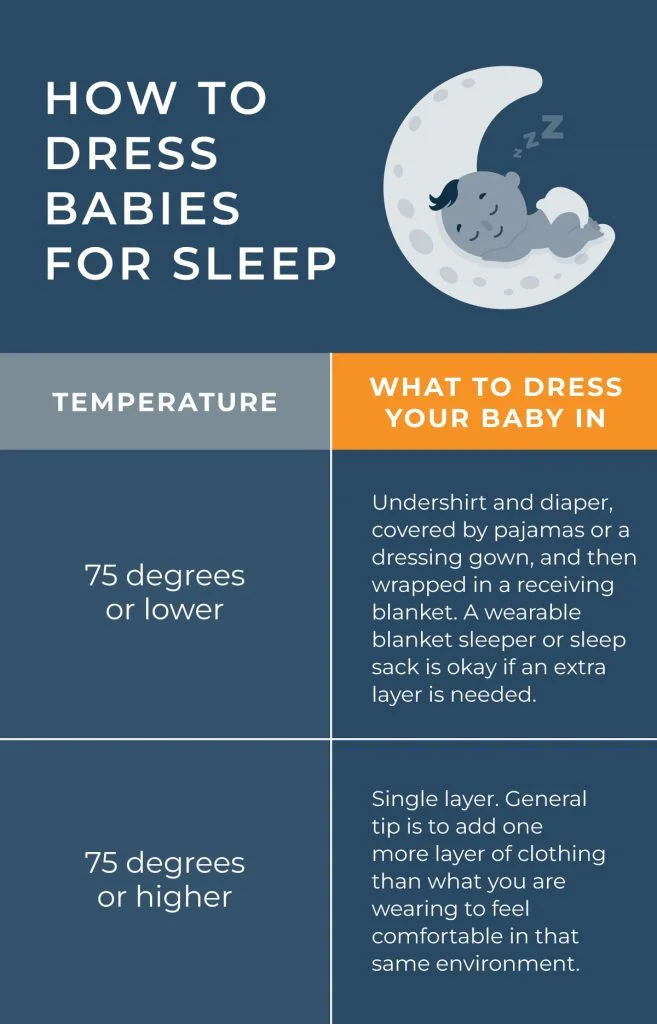
While this chart covers sleeping in an environment 75 degrees or warmer, experts with the Cleveland Clinic advise that a baby’s bedroom temperature shouldn’t exceed 70 degrees because that can be too warm for the baby.5
This chart can give you a solid starting point when dressing your infant, but we also recommend checking with their pediatrician, as well, for additional guidance.
Nicole Johnson, lead pediatric sleep consultant at The Baby Sleep Site shares, “If your baby is younger and still swaddled, consider this one of the layers. Most babies may not need more than a onesie underneath a swaddle blanket depending on the material.”
Get More Info: What’s the Best Room Temperature for Baby?
Checking on Babies While They Are in Bed
If you’re concerned about your baby’s temperature during the night, it never hurts to assess their comfort level.
Every baby is different, and it can be tricky trying to tell if your infant is too hot or too cold. A good indication of their temperature is to feel their back or stomach.5 If their skin feels damp or their chest feels warm, take a layer off or lower the temperature in the room a little bit.6
Learn More: Parent’s Guide To a Child’s Sleep
Best Breathable Fabrics for Warm Nights
When it’s warmer out, your baby will probably appreciate lightweight, natural fabrics that allow their skin to breathe. A few good ones include cotton, linen, silk, hemp, cashmere, or wool. These are also good for layering, as they tend to prevent static cling yet still provide insulation.
When Can Babies Use Blankets?
The American Academy of Pediatrics recommends that babies do not use loose blankets, pillows, stuffed animals, or other sleep accessories until they are at least one year old.7 This is to reduce your baby’s risk of SIDS or accidental suffocation.
In addition, they recommend that you lay your baby down on their back to sleep every time you put them to sleep on a flat, firm, non-inclined surface. Their sleep space should be free of any soft objects, including bedding.7
Frequently Asked Questions
How should a baby be dressed for sleep?
When it’s 75 degrees or warmer, babies should sleep in a single layer of clothing, with a rule of thumb being that they should wear one more layer than what you are wearing to feel comfortable. Conversely, when it’s lower than 75 degrees, they should wear an undershirt and diaper. They can then be covered up in pajamas and wrapped in a receiving blanket. If they need another layer, you can put on a wearable blanket or sleep sack.4
You should also be mindful of the sleep sack to ensure it’s safe for the baby. For example, in a 70-degree room, you could put them in a sleepsack with a TOG rating of about 1, while during the colder winter months, you might put them in a sleepsack with a TOG rating of 2 to 2.5.
How should I dress my baby to prevent SIDS?
Since overheating has been shown to increase the risk of SIDS, it’s important that you dress your baby in breathable clothing and do not put a hat or covering on their head, as this can increase their risk of overheating.1, 6
Do not allow your baby to go to sleep with any loose blankets, pillows, or soft objects until they are at least one year old.7
Additionally, the American Academy of Pediatrics cautions against the use of any weighted sleep sacks and blankets in their most updated guidelines.7 Researchers say regular sleep sacks can be safe, permitted they fit strict criteria for safety, such as the appropriate TOG rating and material, and that they are well-made.3
How do I know if my baby is cold at night?
A good way to gauge your baby’s temperature is to place your hand on their stomach or back. They should feel slightly warm; if they feel cool, they may be too cold. Keep in mind it’s normal for your baby’s hands and feet to feel slightly cooler than the rest of their body, and this doesn’t indicate that they’re too cold.5
Johnson adds that if your baby’s fingers or toes feel like ice cubes, you should add another layer or use a warmer sleep sack. Your baby’s skin should feel cool to the touch but not frigid.
Final Word of Advice
Knowing what’s best for a baby can be challenging because children can’t fend for themselves and directly articulate their needs. However, being a caregiver involves continually learning about your baby, including how to dress them appropriately.
You may or may not get it right the first time, and that’s okay; you can always add or remove layers. As mentioned, your child’s doctor can also be a source of guidance if you’re ever unsure.
Jill Zwarensteyn
Senior Editor
About Author
Jill Zwarensteyn is the senior editor for Sleep Advisor and a certified sleep science coach. She is enthusiastic about providing helpful and engaging information on all things sleep and wellness.
Combination Sleeper
Education & Credentials
- Certified Sleep Science Coach
References:
- Jhun, I.D, et. al. “Ambient Temperature and Sudden Infant Death Syndrome in the United States.”. Epidemiology. 2017.
- Baker, Brandon. “Why is it so difficult to sleep when it’s hot?”. Penn Today. 2019.
- Williams, Alessandra Glover., Finlay, Fiona Finlay. “Can infant sleeping bags be recommended by medical professionals as protection against sudden infant death syndrome?”. Archives of Disease in Childhood. 2019.
- “Tips for Dressing Your Baby”. Healthy Children. Last modified June 16, 2016.
- “What’s the Best Temperature for Sleep?”. Cleveland Clinic. 2021
- Roberts, A. “Is My Baby Too Hot?”. Frimley Park Hospital. Last modified July 2015.
- Moon MD, Rachel Y., et. al. “Sleep-Related Infant Deaths: Updated 2022 Recommendations for Reducing Infant Deaths in the Sleep Environment”. Pediatrics. 2022.